
What Does Hail Damage On a Car Look Like?
The sound of a hailstorm is unmistakable. Once the ice stops hammering down, the first question on any car owner's mind is, “How bad is the damage?” Staring at your car, it can be hard to tell what’s new and what’s just normal wear and tear. This guide will show you how to find hail damage, even in hidden spots, so you know precisely what you’re dealing with.
A typical hail dent is a small, round indentation without the sharp crease of a door ding. Learning to identify them often comes down to knowing how to look. We’ll show you how to use light and the right viewing angle to make even small dents easy to spot, giving you the confidence to assess your vehicle and understand if the damage is minor or serious.
Step 1: How to Inspect Your Car for Dents (It's All About the Light)
Direct overhead sunlight is surprisingly good at hiding dents, as glare can wash out the subtle shadows that give them away. For a clearer view, try inspecting your car during dawn or dusk. The low-angle sunlight rakes across the car’s surfaces, casting a tiny shadow inside each impression and making them pop.
To spot these imperfections, crouch so your eyes are nearly level with the surface of the hood, roof, or trunk. From this shallow angle, look for any ripples or distortions in the reflection of the sky. As you shift your position, the reflection will move, but the dents will stay put, revealing themselves as small, stationary flaws.
If you check your car in a garage or on a cloudy day, use a flashlight. Place the flashlight on the panel and aim the beam across the surface, not directly at it. This technique highlights every low spot, turning invisible damage into an obvious problem.
Hail Dents vs. Door Dings: Spotting the Key Differences
Once you know how to find dents, you need to determine if they are from hail. Fortunately, hail damage leaves a distinct fingerprint that separates it from a random ding from the grocery store parking lot.
The easiest way to tell them apart is by their shape and location:
A Hail Dent: Look for a small, relatively symmetrical circle, like a shallow bowl pressed into the metal. The center is typically smooth, and the paint is often intact. Most importantly, you’ll rarely find just one; they appear in clusters on the car’s top surfaces.
A Door Ding or Crease: This damage is often a line or a sharp, creased dent rather than a perfect circle. You might see a scuff of another car’s paint inside it. These are usually isolated incidents found on the sides of your car.
Because hail falls from above, its damage pattern is predictable. The hits are concentrated on surfaces that face the sky—the roof, hood, and trunk lid. Damage from a door or shopping cart only happens on vertical sides. This simple logic of location can tell you almost everything you need to know about the cause.
The Hail Damage "Hot Spots": Where to Focus Your Inspection First
Hail comes from above, so you can perform a quick, targeted check instead of feeling overwhelmed. Start your inspection with the surfaces that face the sky, as they bear the brunt of any storm.
These primary "hot spots" include:
The Roof: As the largest and most exposed flat surface, this is the number one place to look.
The Hood: The second most common area for damage is right at the front of your car.
The Trunk Lid: Don't forget the flat surface at the back, which is just as vulnerable.
Mirrors & Trim: Look closely at the plastic housing on your side mirrors and the thin metal trim around your windows. These softer materials can show dents and dings easily.
Car doors aren't on the primary list because vertical panels are usually safe from hail that falls straight down. The exception is a storm with severe, driving winds, which can throw ice sideways. After you’ve reviewed the hot spots, a quick scan of the sides is a good final step.
Assessing Severity: Is It Minor Damage or a Major Repair?
Once you’ve spotted the dents, is it a minor cosmetic issue or a major repair? The answer almost always comes down to the paint’s condition. Run your fingernail gently across the center of a dent. If it glides smoothly, the paint is likely intact. If it catches in a tiny crack or chip, the damage is more serious because it has broken the car’s protective finish.
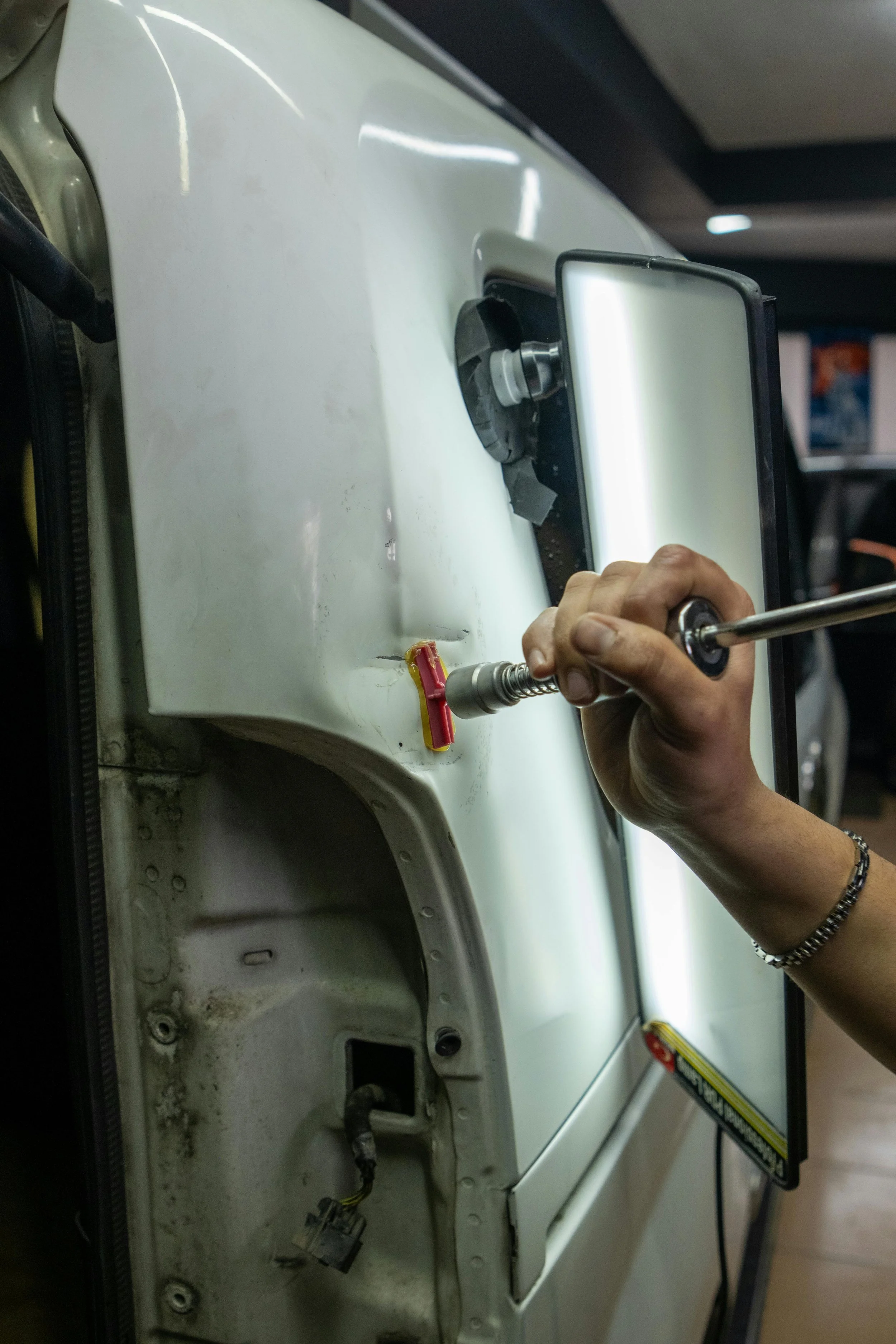
For dents with intact paint, the damage can often be fixed with Paintless Dent Repair (PDR). A technician uses specialized tools on the backside of the panel to gently push the dent out, preserving your factory paint. This method is faster and more affordable than a traditional repair, making it ideal for the shallow, round dings from a light hailstorm.
When your fingernail catches, signaling broken paint, a conventional body shop repair is needed. The area is sanded down, filled, and repainted to match your car. This process is necessary for deeper dents or when the sheer number of impacts makes PDR impractical, ensuring the metal underneath is protected from future rust.
Beyond the Dents: Checking Glass, Lights, and Plastic Parts
Hail doesn't just damage metal; it can easily harm glass and plastic. After a storm, carefully inspect your windshield for small chips, "bullseye" impact marks, or star-shaped fractures. These tiny impacts can spread into long, vision-obscuring cracks with changes in temperature or road vibrations. Don't forget to check your sunroof and side windows, too.
Your car's plastic and composite parts react differently than metal. Instead of denting, materials like headlight covers, taillights, the front grille, and mirror housings are more likely to crack or shatter. This type of damage is often overlooked but is crucial for a complete and safe repair.
Unlike a dent that can be popped out, any cracks in glass or plastic mean the part must be replaced. This detail can significantly affect the total repair estimate, as a professional job addresses every cracked light and chipped window, not just the dents on the hood.
Buying a Used Car? How to Spot a Bad Hail Damage Repair
When inspecting a used car, a glossy shine might hide a history of poor repairs. Use the reflection test: stand back and look at how straight lines from a building or overhead lights reflect across the hood and roof. If those lines become wavy or distorted, it's a red flag that the underlying metal isn't smooth, a common sign of a rushed PDR job.
Another tell-tale sign is mismatched paint texture. Factory paint is smooth, but a repainted panel often has a slightly bumpy texture known as "orange peel." Compare the texture of the roof or hood to an area that's rarely repaired, like the painted surface inside your door jamb. If the horizontal panels look bumpier, it’s a clear sign of a previous repair that required repainting.
Finally, even skilled PDR can leave clues. In a dimly lit garage, shine a flashlight at a low angle across the panels and look for tiny, pin-sized high spots or "pricks" in the paint. These are artifacts where a technician’s tool pushed from behind the panel. Finding a field of them suggests extensive work was done.
You've Found Hail Damage. Here's Your 3-Step Action Plan
Now that you can identify the tell-tale signs of hail, you are ready to take control of the situation. Follow these three steps to begin the repair process.
Document the Damage: Use your phone to take photos of everything. Get wide shots of the entire car to show the overall impact, then take close-ups of the dents on the roof, hood, and trunk. This evidence is your most important first step.
Check Your Coverage: Find your insurance card or policy documents and look for "Comprehensive Coverage." This is the part of your policy that typically covers hail damage.
Make the First Call: Contact your insurance agent or claims department. They will open a claim and guide you on their process for getting a professional estimate.
By following these steps, you can move from assessing the damage to creating an effective action plan, putting you in the driver's seat of the repair process.
